

Overview
Nike footwear designers traditionally depended on complex handoffs to 3D specialists and overseas factories to bring their sketches to life. As part of NXT (Nike Exploration Team), I led an initiative to design a desktop tool tailored to their existing 2D vector workflow, enabling instant 3D visualization and automated tech pack export for faster, friction-free prototype builds.
Challenges and Opportunities
Fragmented 2D-to-Factory Pipeline: Slow, multi-step handoffs between 2D designers, 3D modelers, and overseas vendors repeatedly delayed sample creation.
High Barrier to 3D Tooling: Industrial 3D software has a steep learning curve. 2D designers avoided these tools entirely, creating an over-reliance on specialized 3D teams.
2D-to-3D Geometry Deformation: We needed to determine if designers could shape base 3D shoe proportions without complex CAD tools. We needed to evaluate whether adjusting 2D splines could instantly deform the underlying 3D mesh in real time.
High Barrier to 3D Tooling: Industrial 3D software has a steep learning curve. 2D designers avoided these tools entirely, creating an over-reliance on specialized 3D teams.
2D-to-3D Geometry Deformation: We needed to determine if designers could shape base 3D shoe proportions without complex CAD tools. We needed to evaluate whether adjusting 2D splines could instantly deform the underlying 3D mesh in real time.
Guiding Principles
Complete Envelope Autonomy: Eliminate handoffs to external 3D teams and vendors. Giving the designer full creative control over the core 3D shape/volume.
Meet Designers in Their Native Pipeline: Lowering the learning curve. Building inside Illustrator/2D vector patterns so there is zero friction.
Zero Manual Specs: Converting canvas geometry into automated tech packs with zero manual entry.
Meet Designers in Their Native Pipeline: Lowering the learning curve. Building inside Illustrator/2D vector patterns so there is zero friction.
Zero Manual Specs: Converting canvas geometry into automated tech packs with zero manual entry.
2D-to-3D Geometry Deformation Challenge
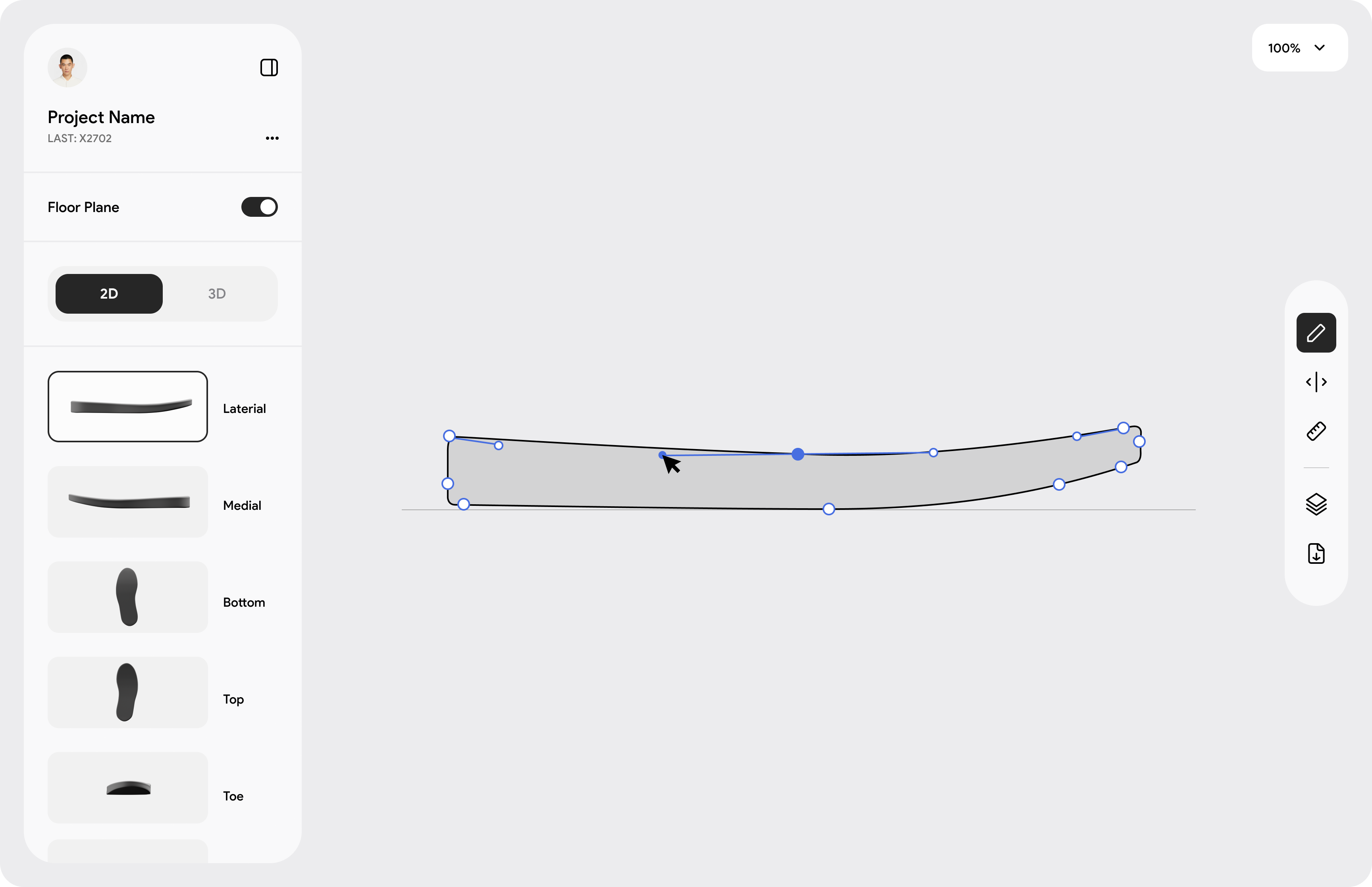
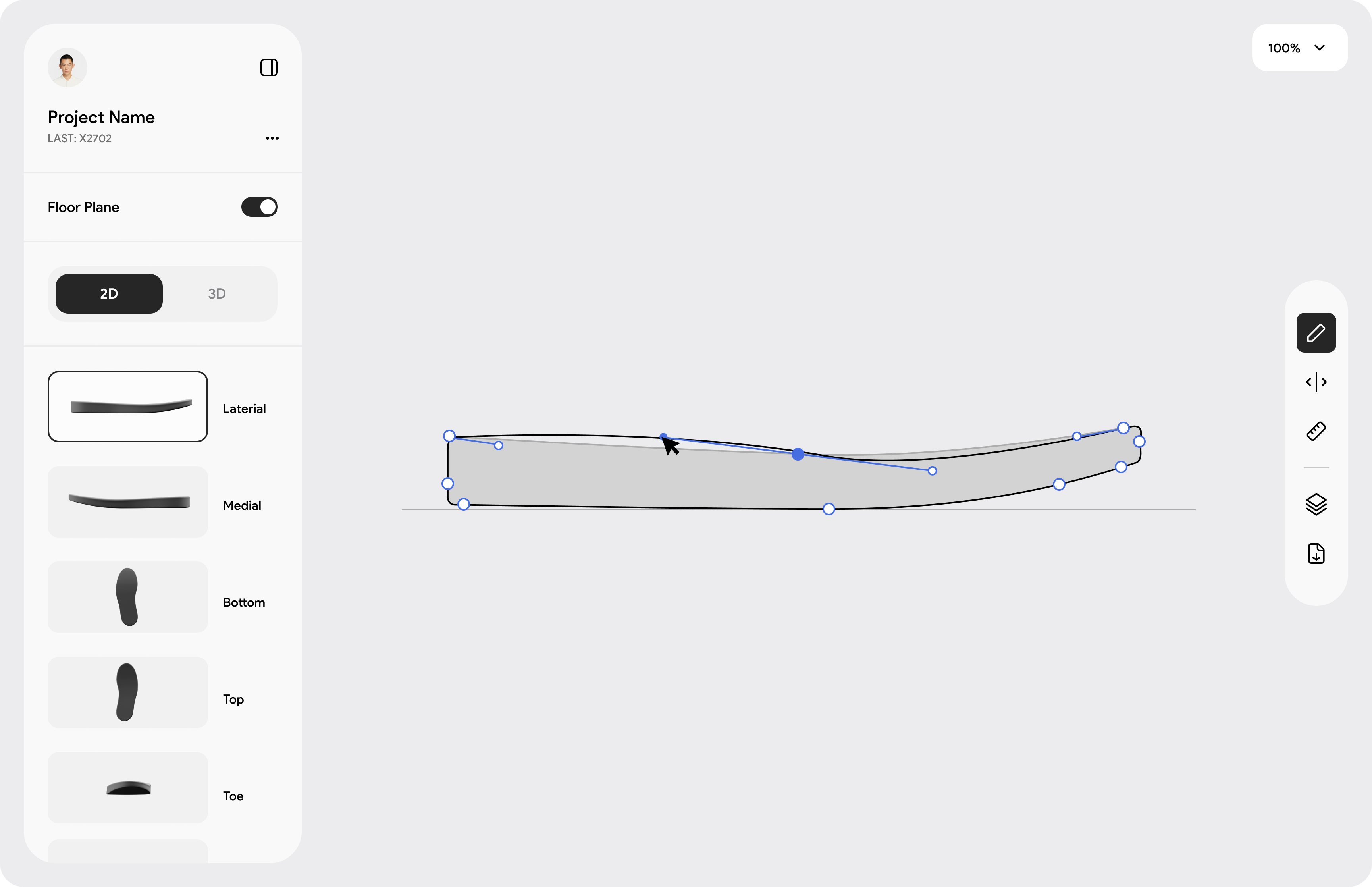
To enable real-time manipulation, I partnered with our Lisbon engineering team to map 3D mesh edges to 2D splines. Designers manipulate a low-density base mesh for instant feedback before auto-subdividing for high-res renders.
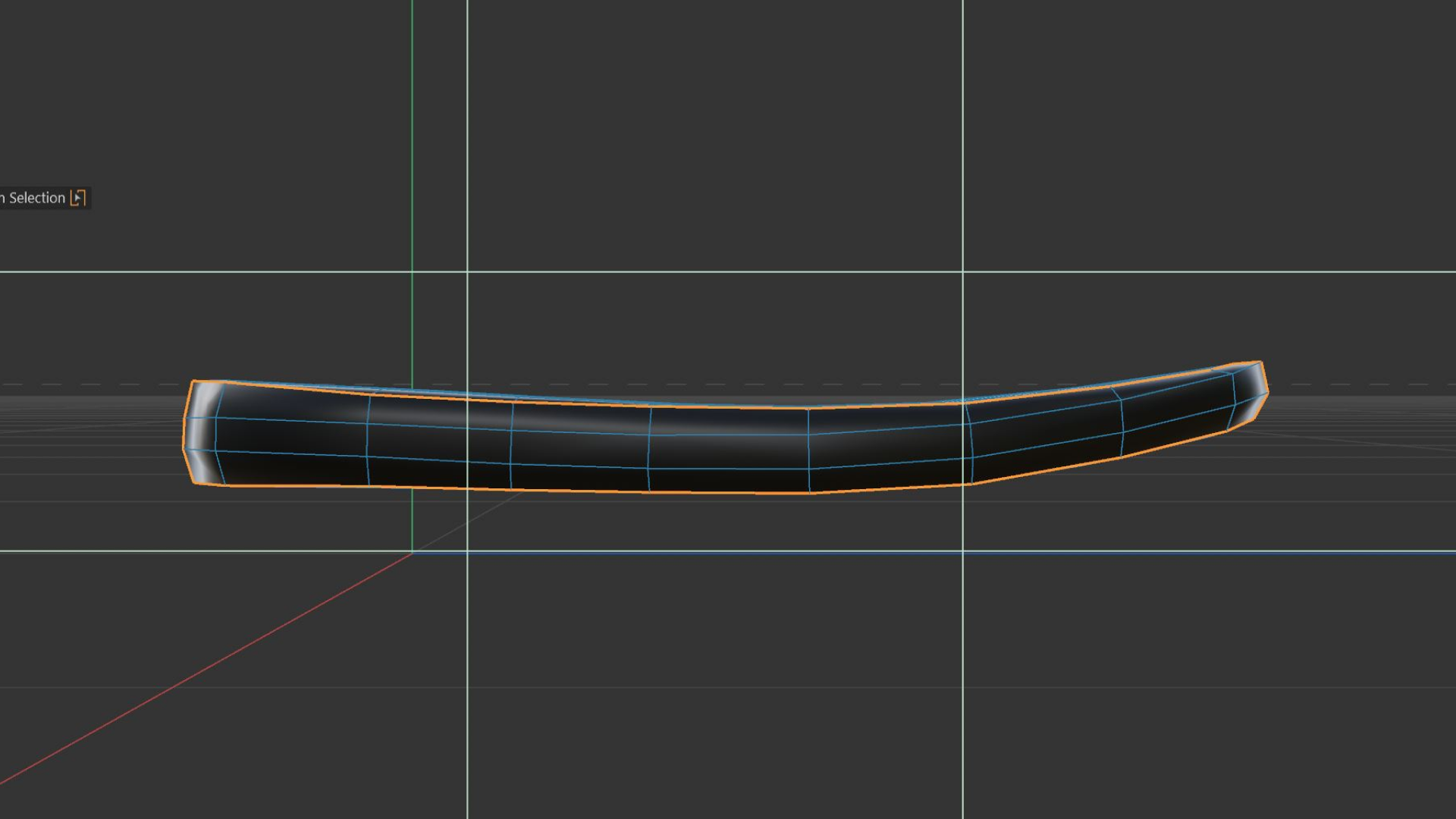
Low density base mesh (lateral spline selection)
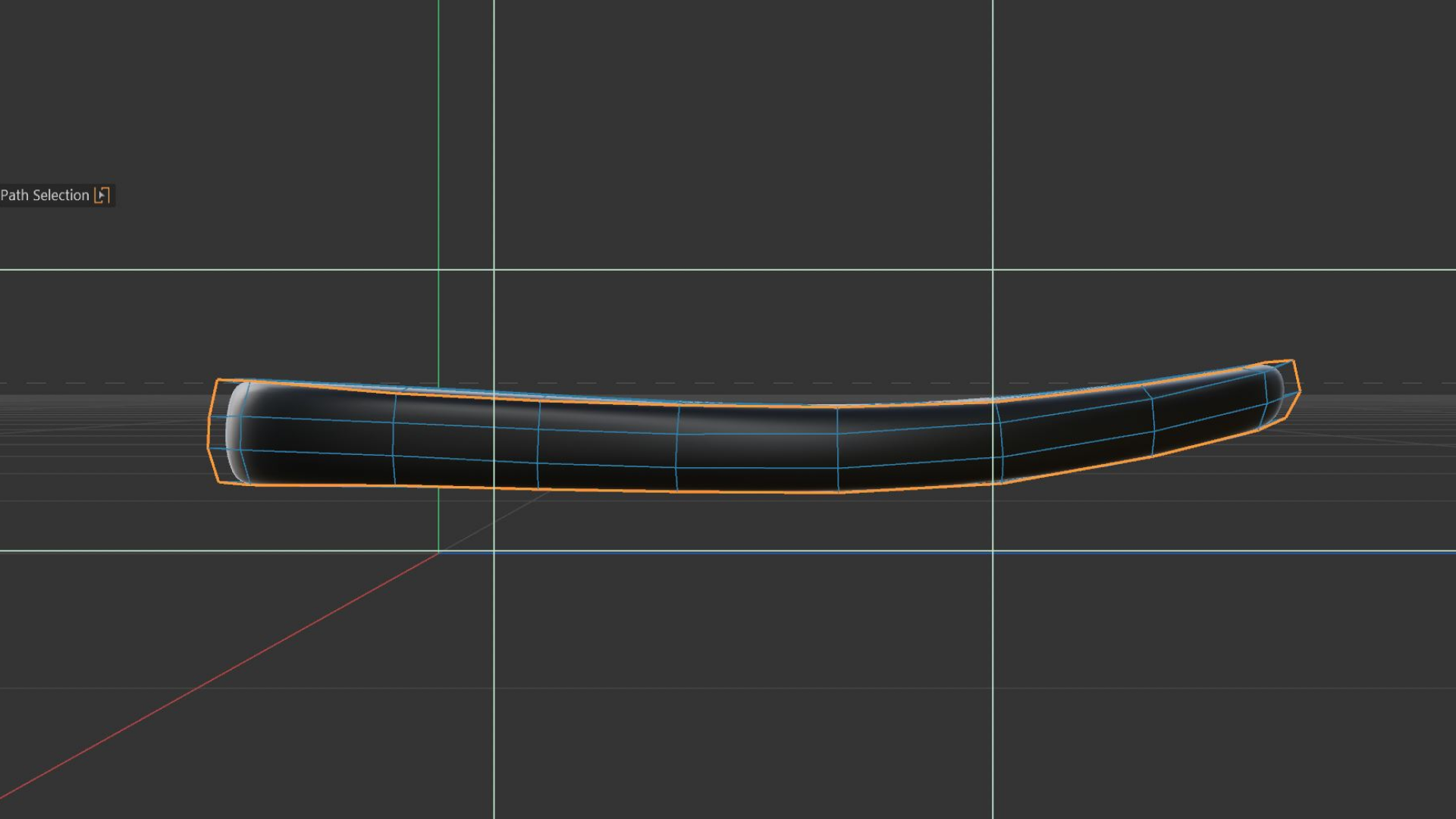
Low density base mesh w/ subdivision applied
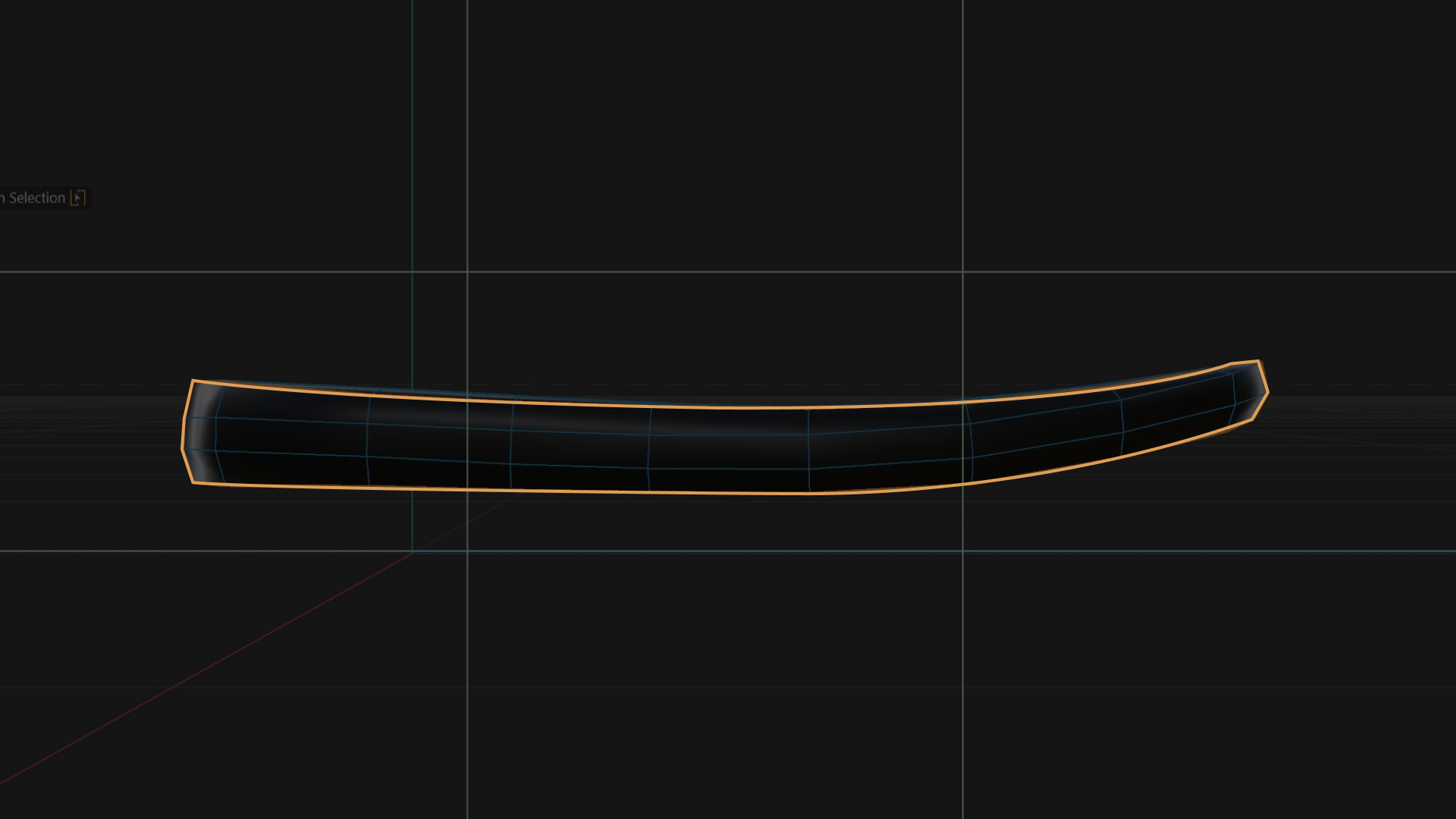
2D editable spline
UX Documentation
Below is an excerpt from our UX Strategy:
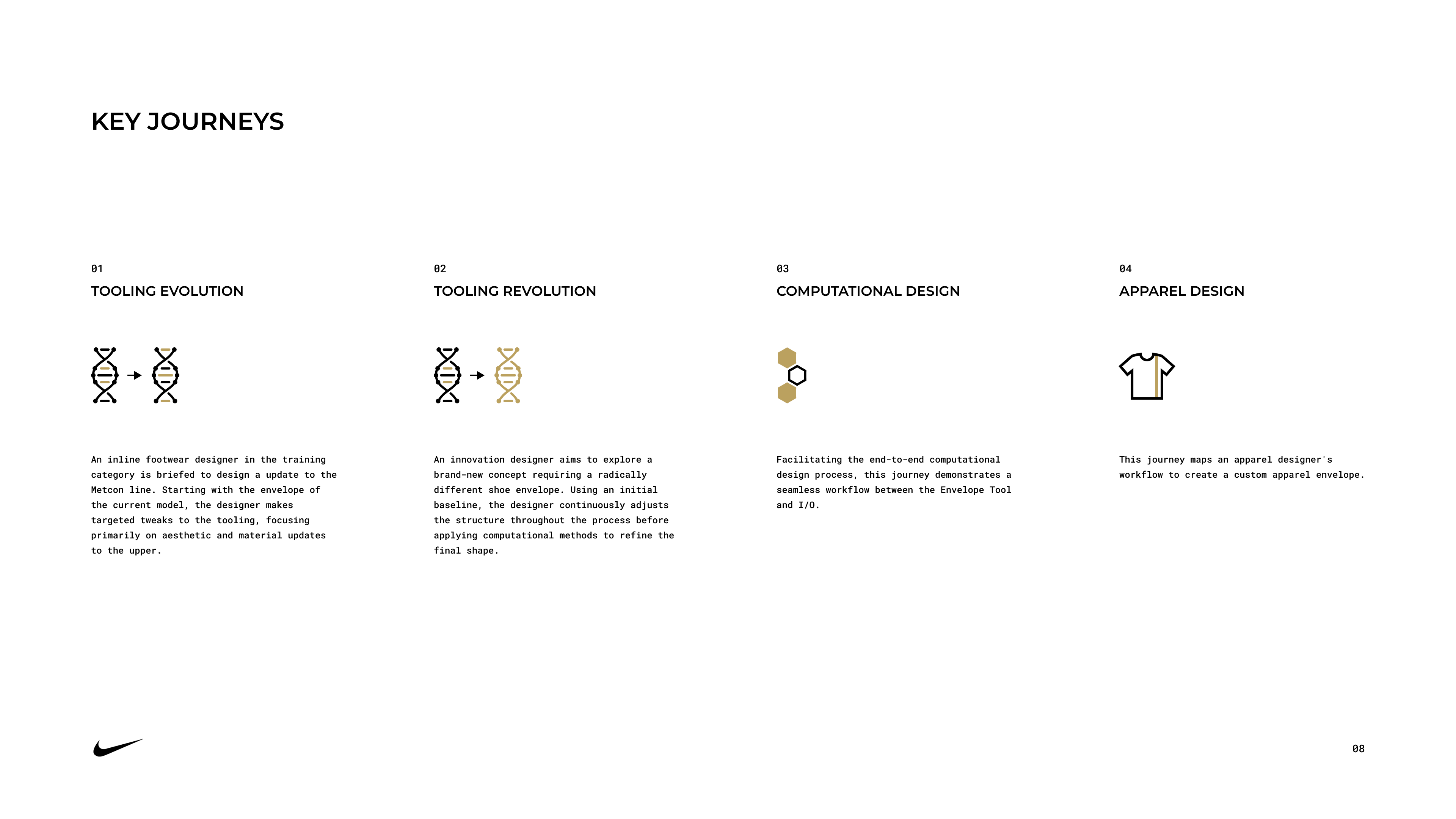
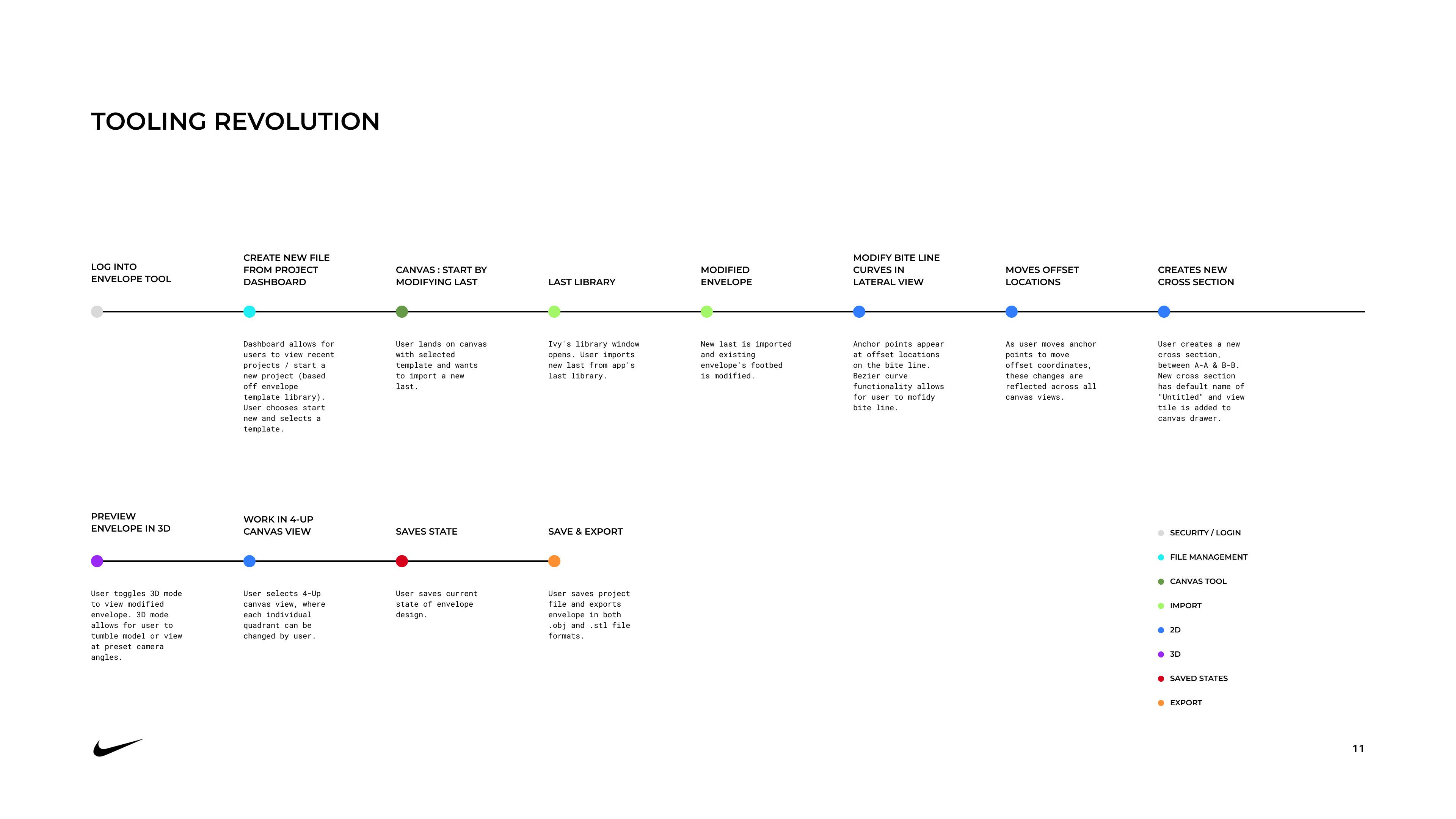
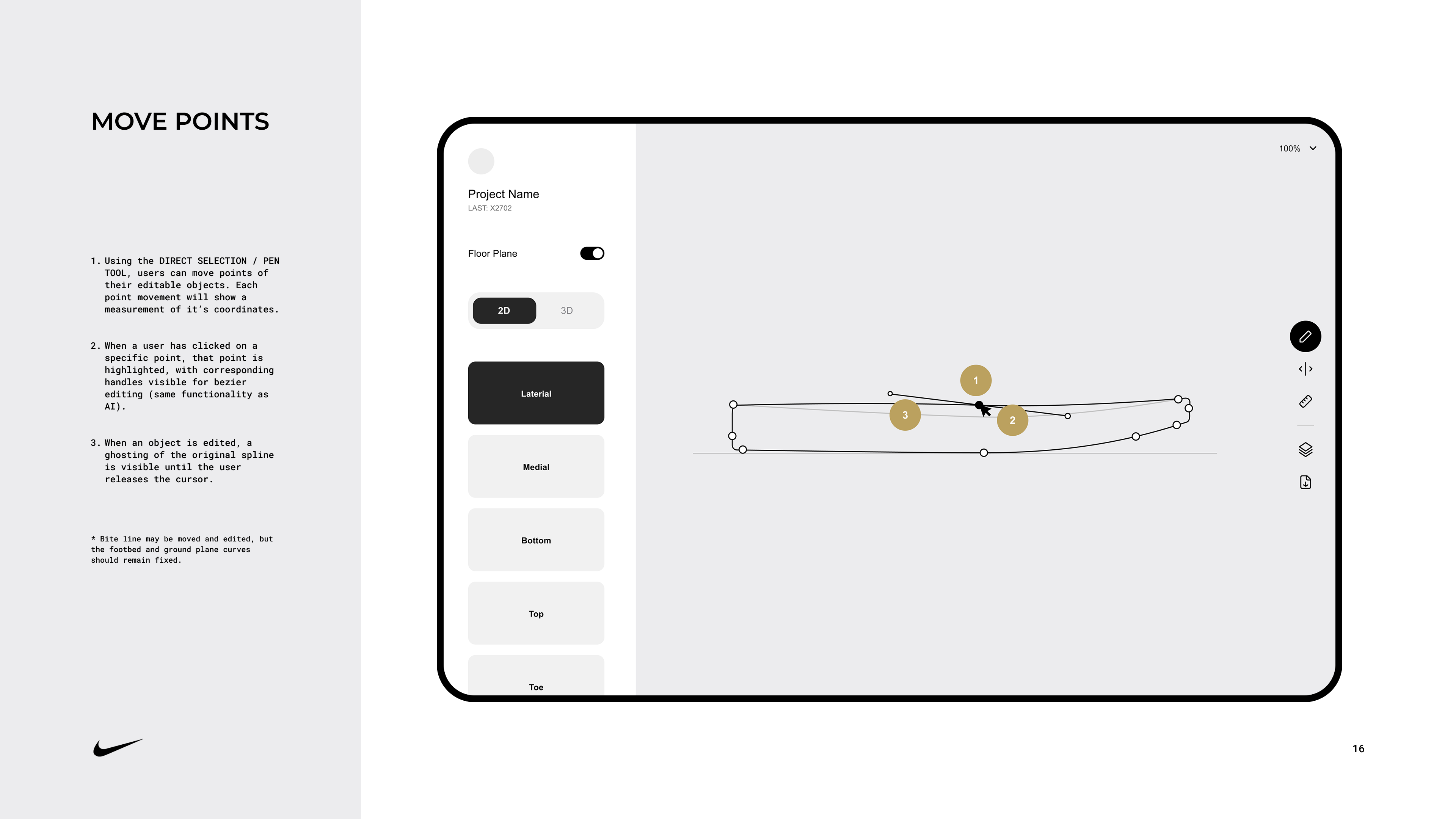
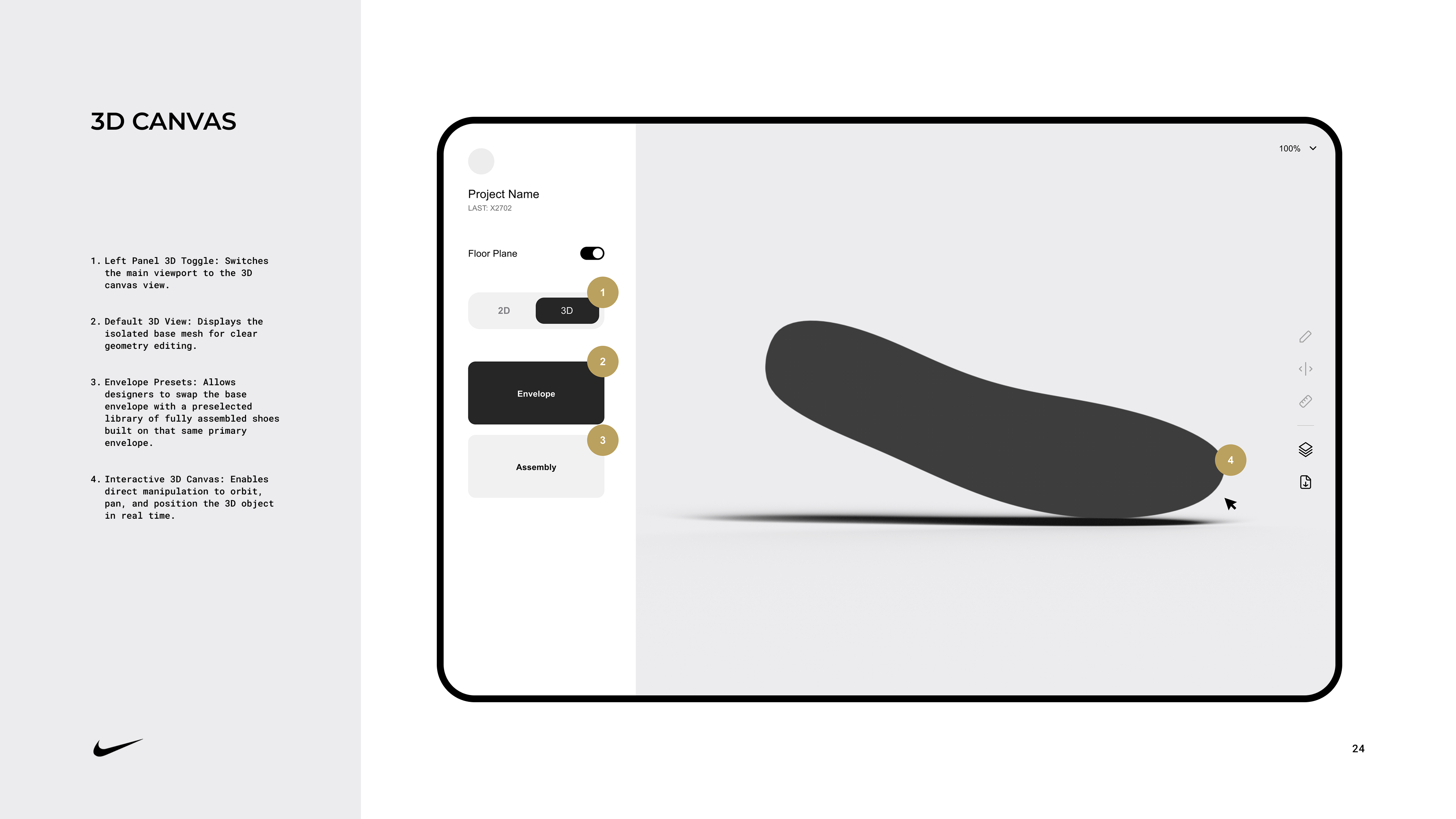
Branding
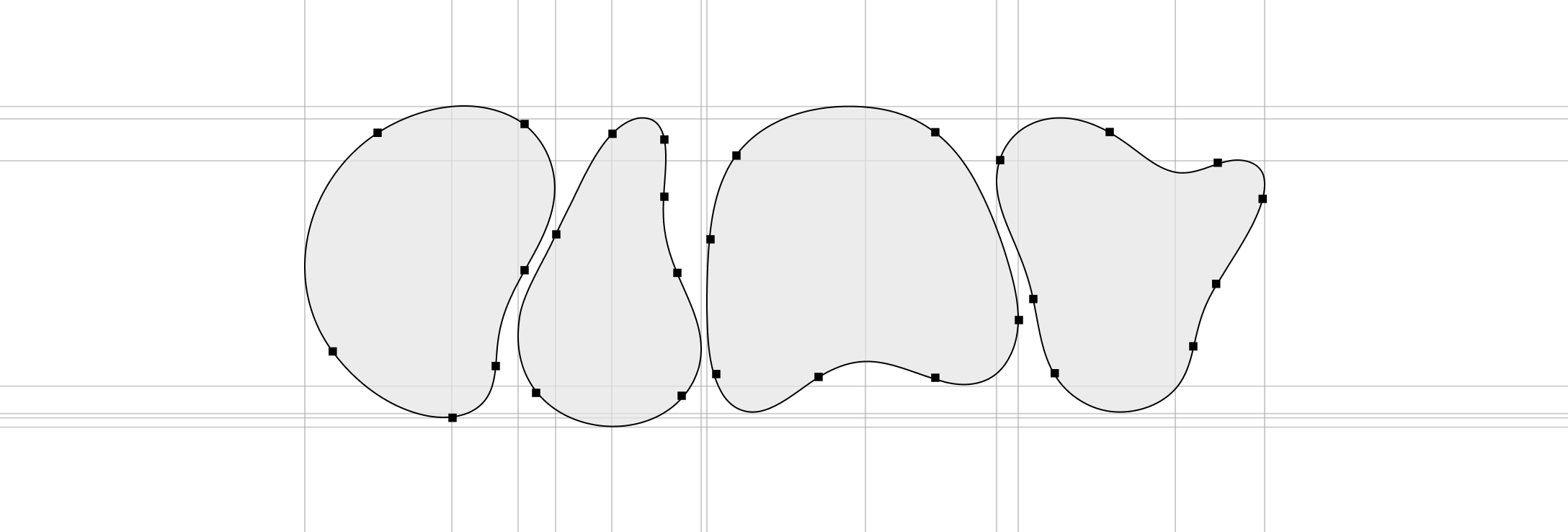
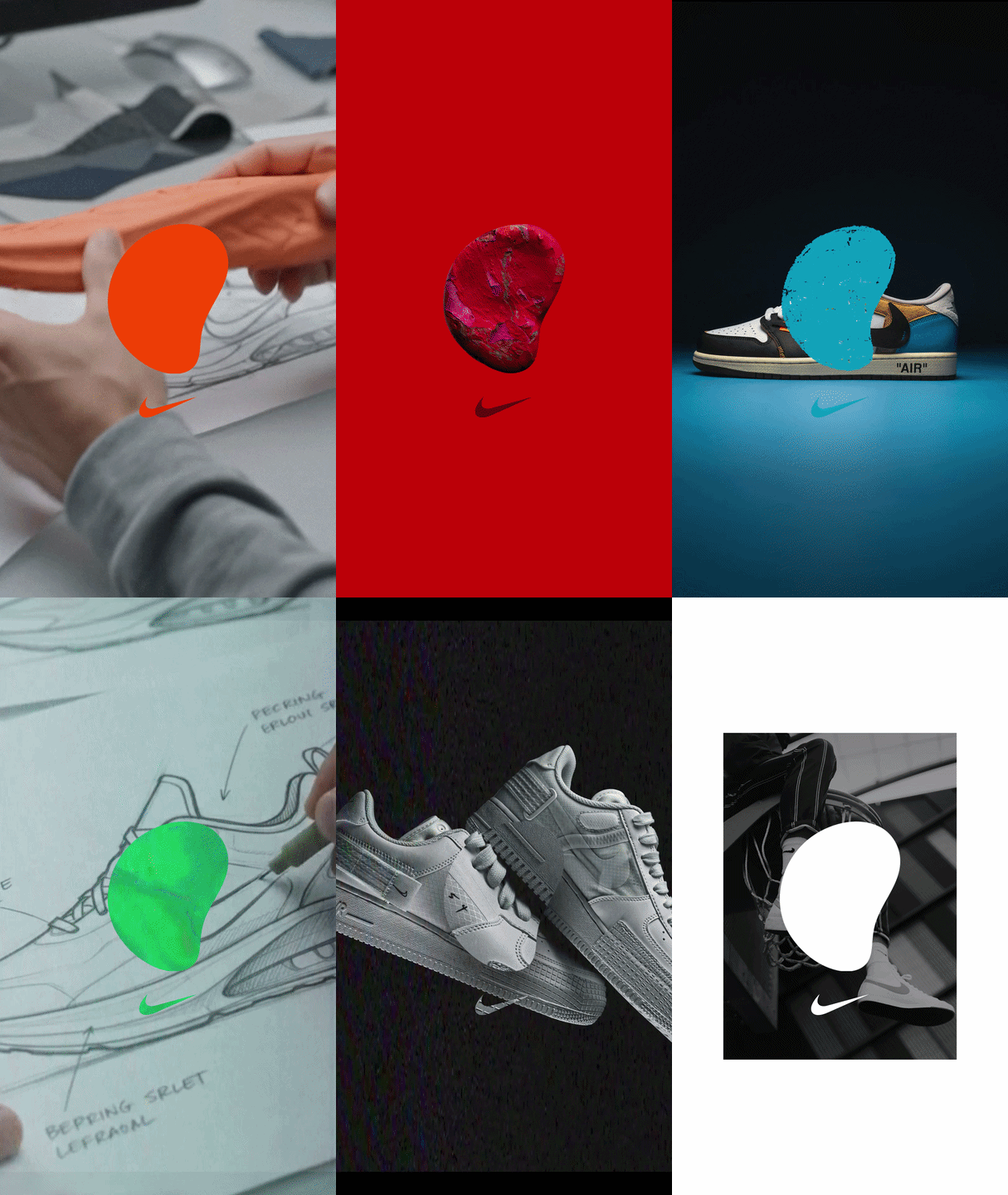
During early user research with footwear designers, the concept of raw creation kept surfacing. Shaping something fluid into a final form.The branding reflected this philosophy: a digital medium as flexible and tactile as clay, allowing designers to mold 2D ideas into 3D forms without technical friction.


Key Concept
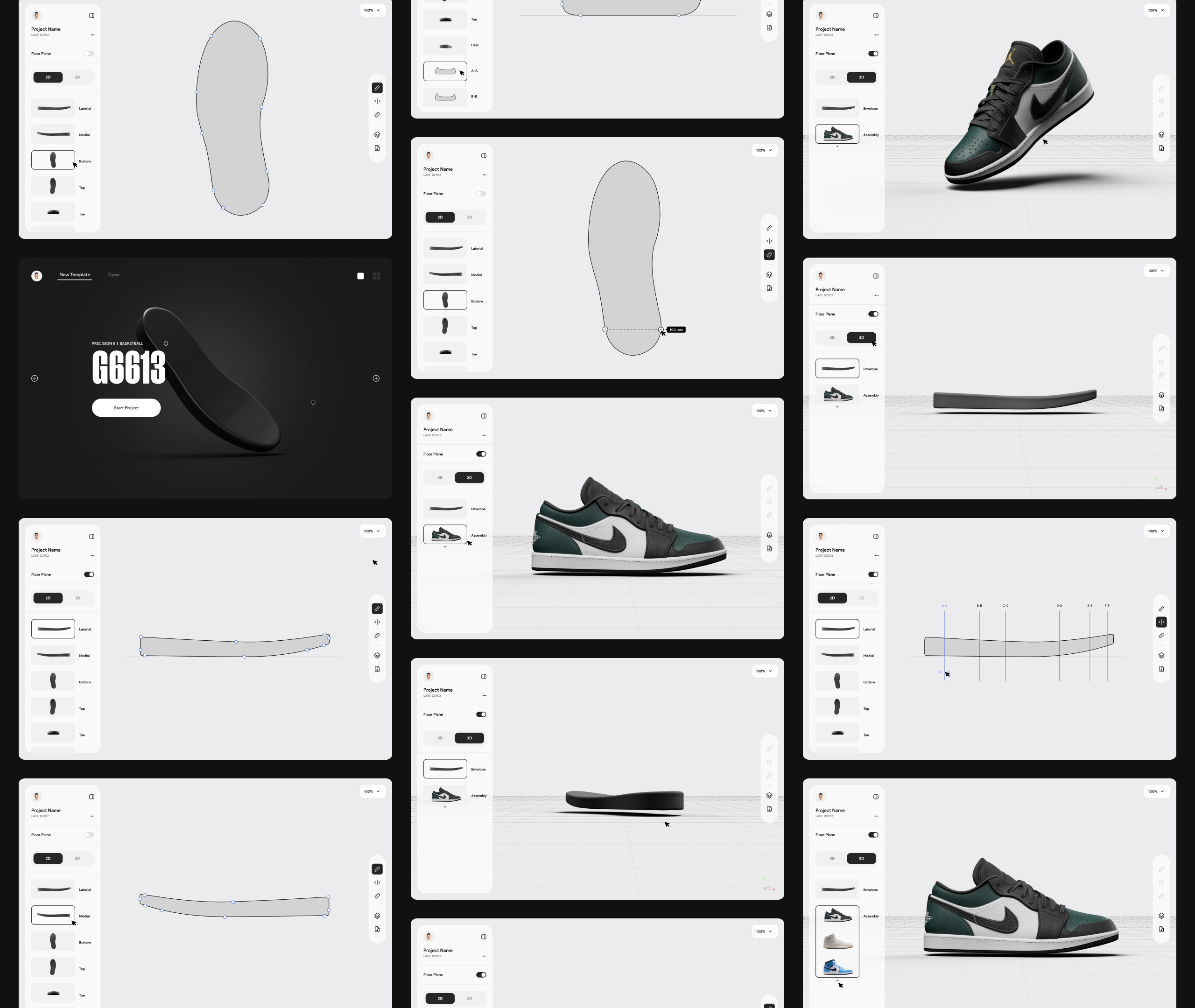
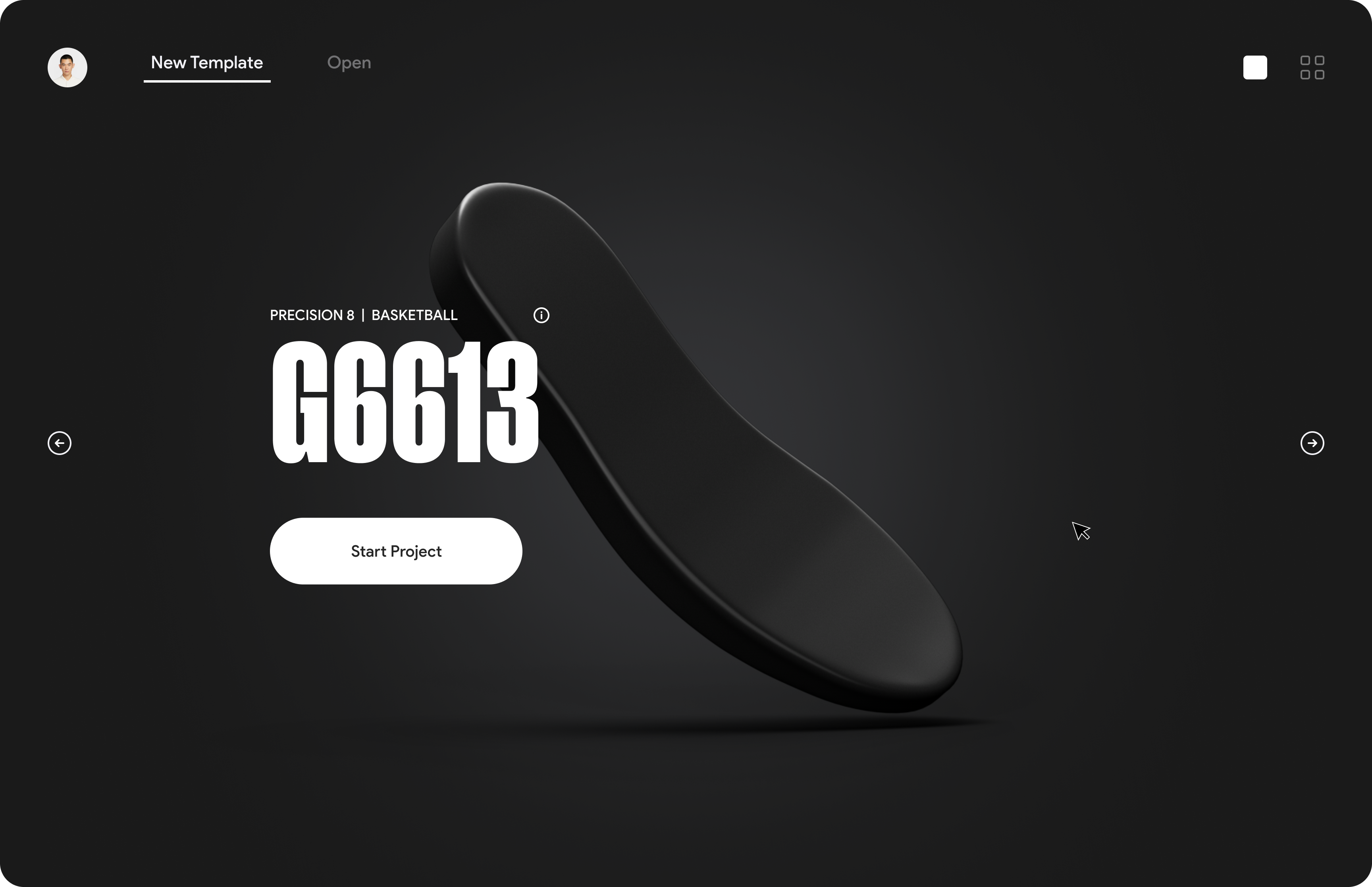
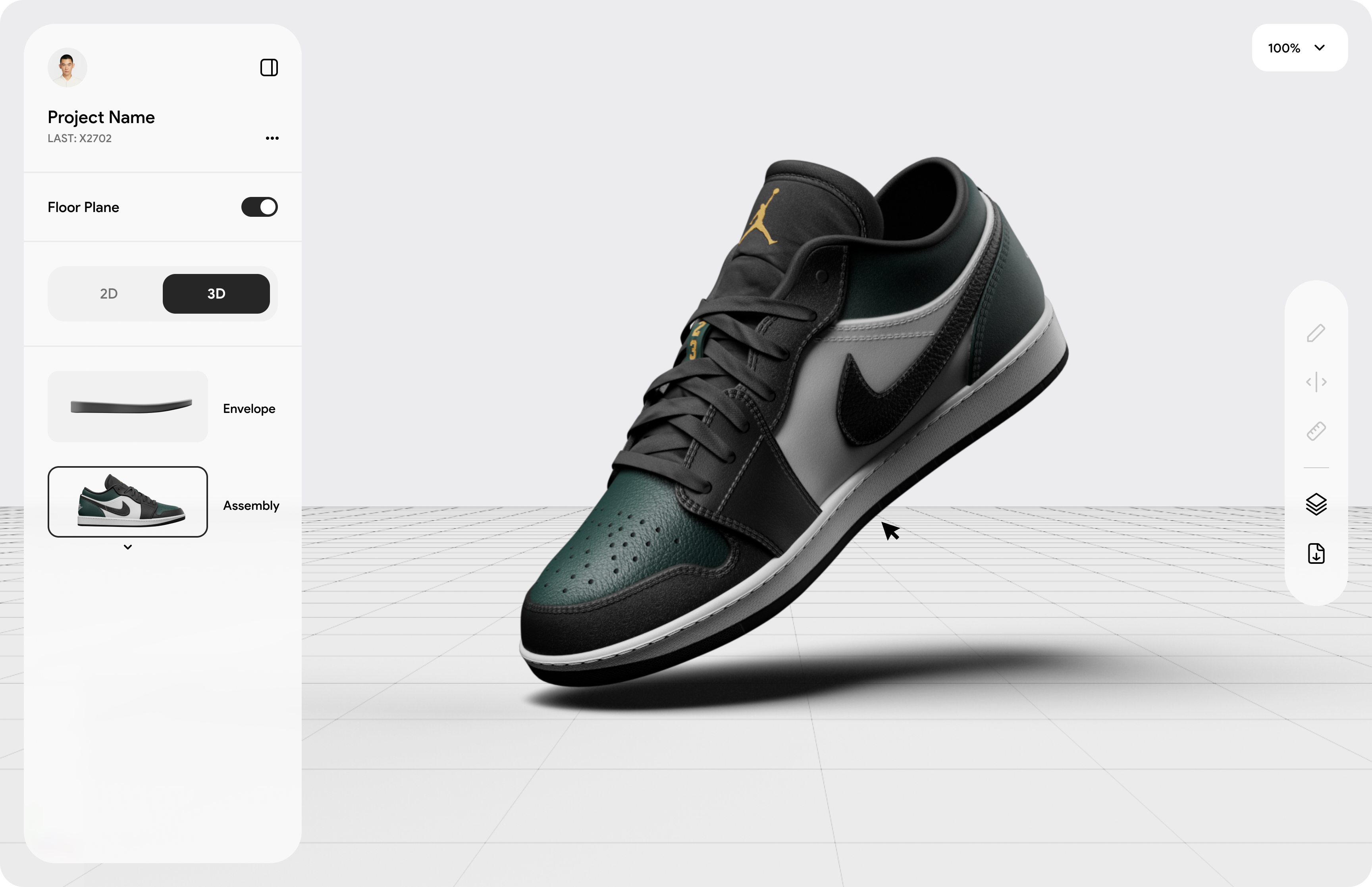
A look at the core UI, designed to translate simple 2D vector inputs into live 3D surface geometry in real time.
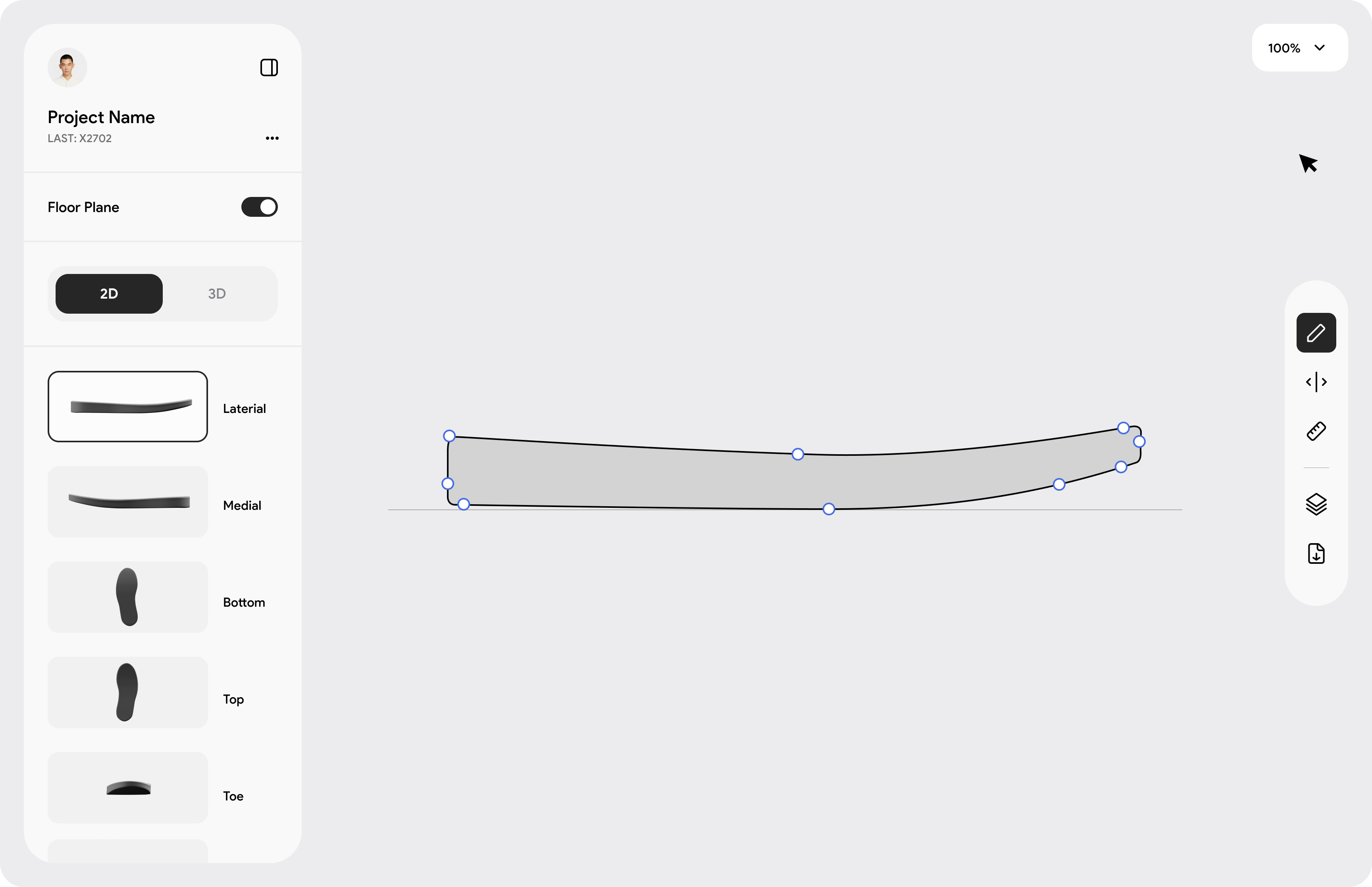
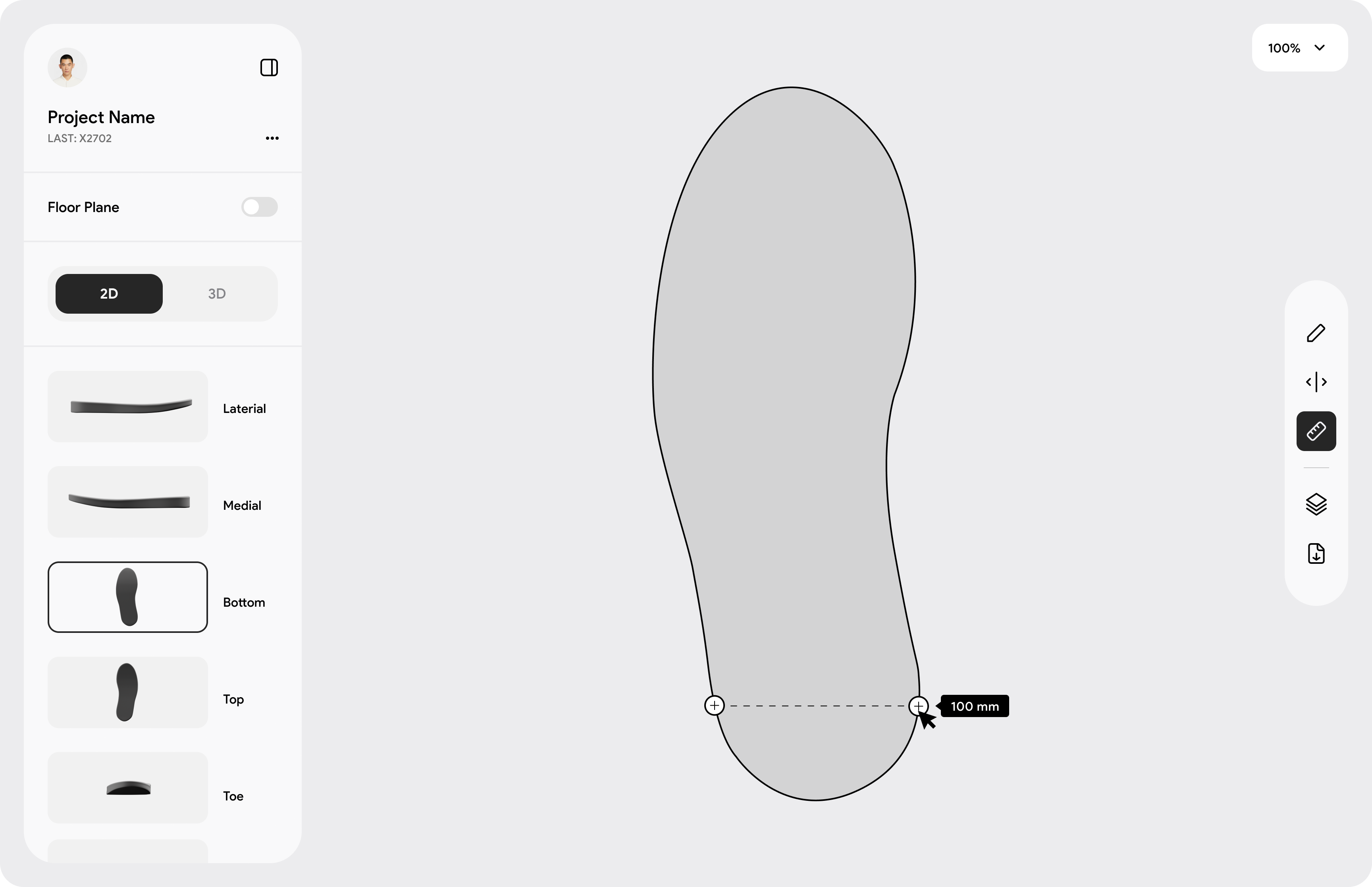
2D Canvas
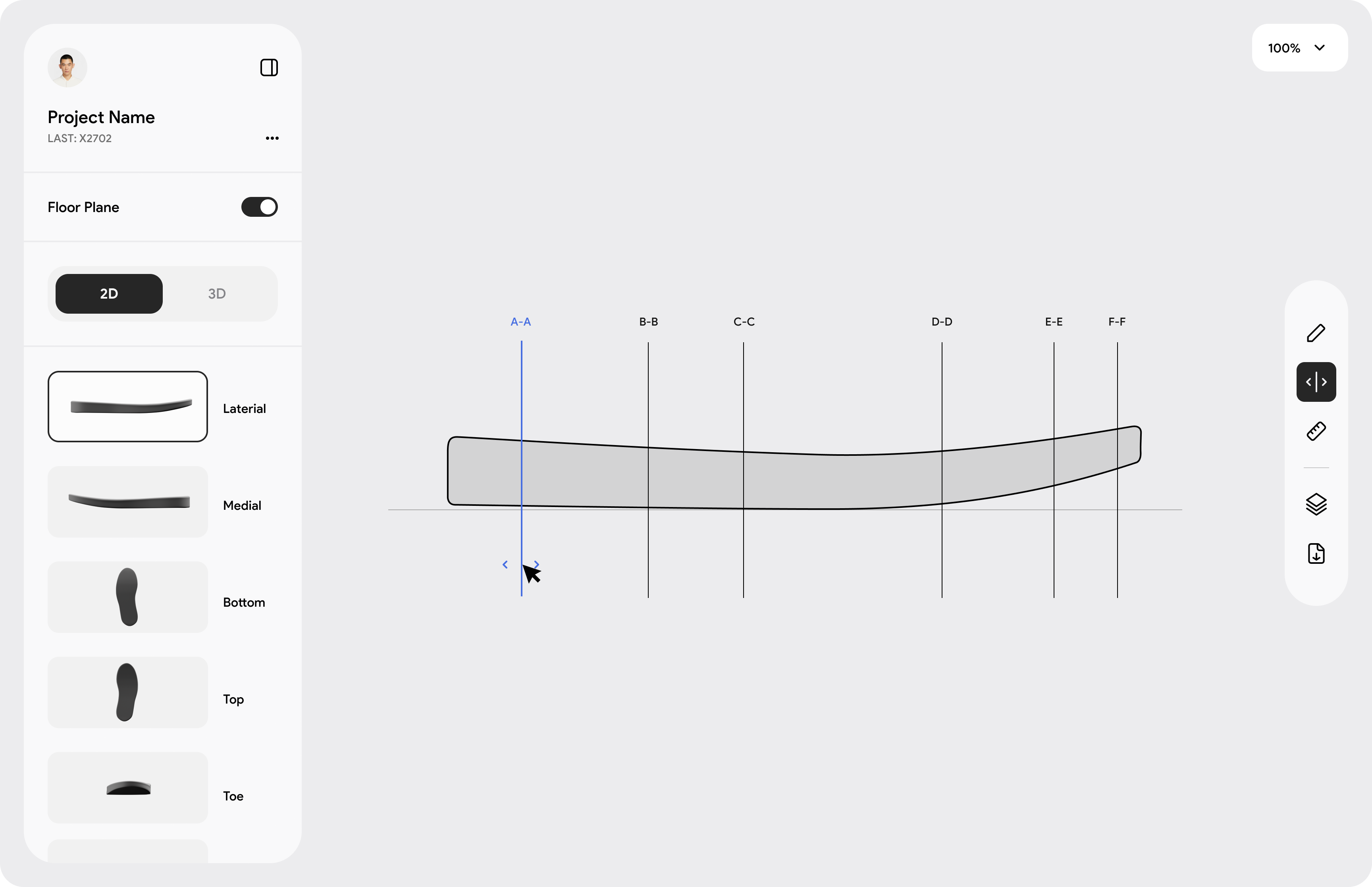
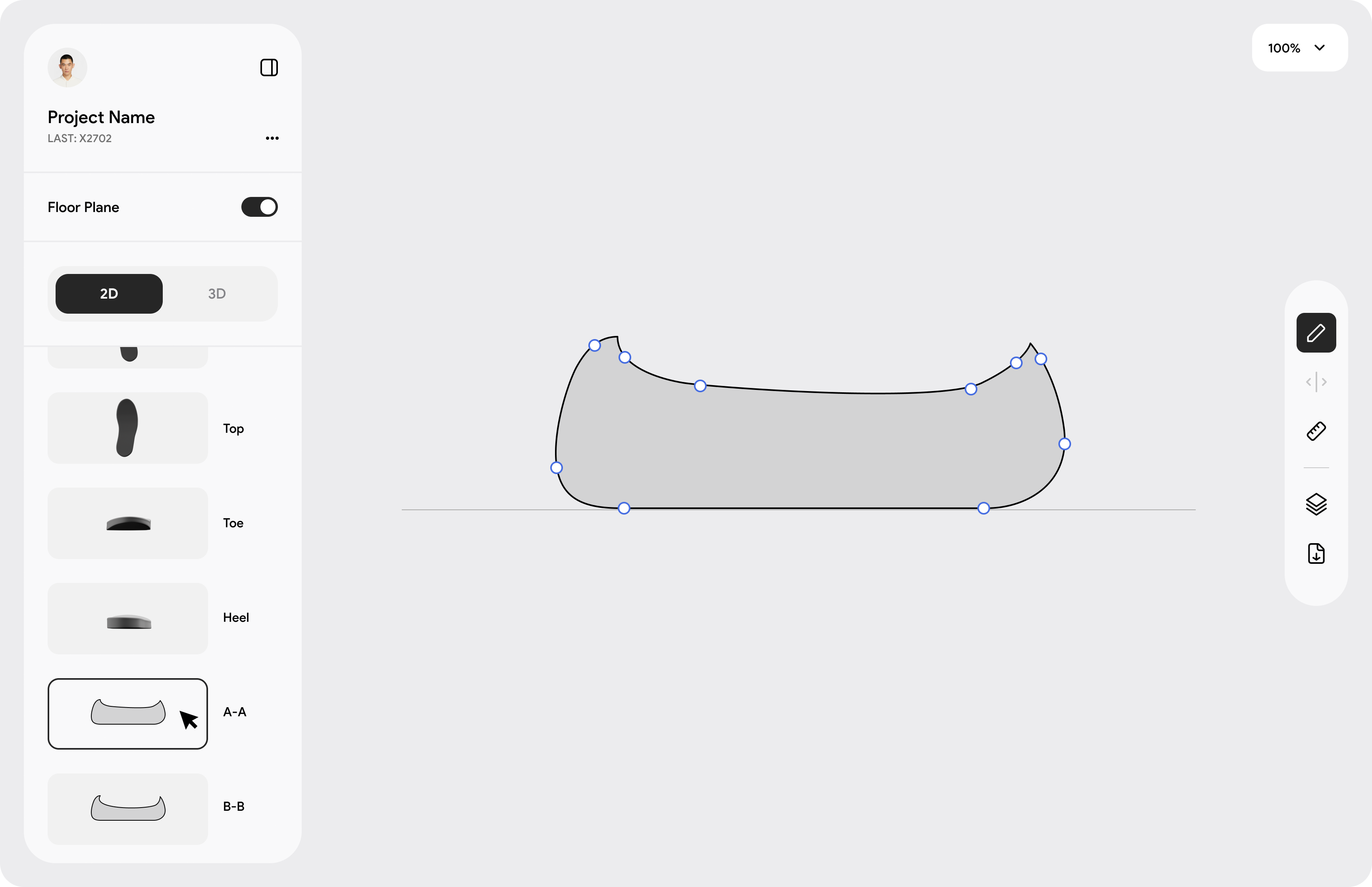
An intuitive, Illustrator-style 2D canvas where designers can manipulate paths, anchor points, and cross sections using familiar vector paradigms. This allowed the team to edit footwear profiles with precision without having to learn a complex new 3D interface.
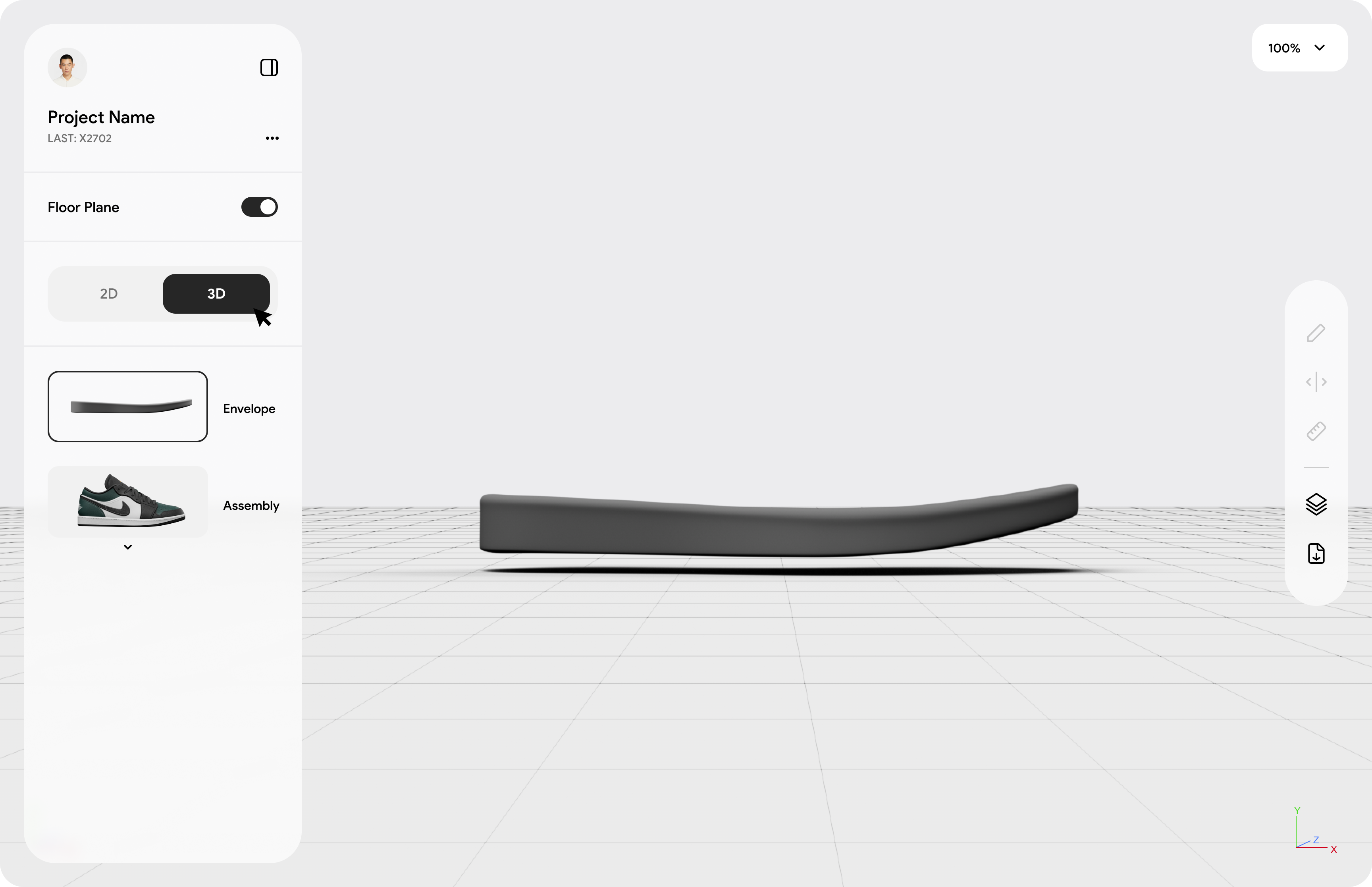
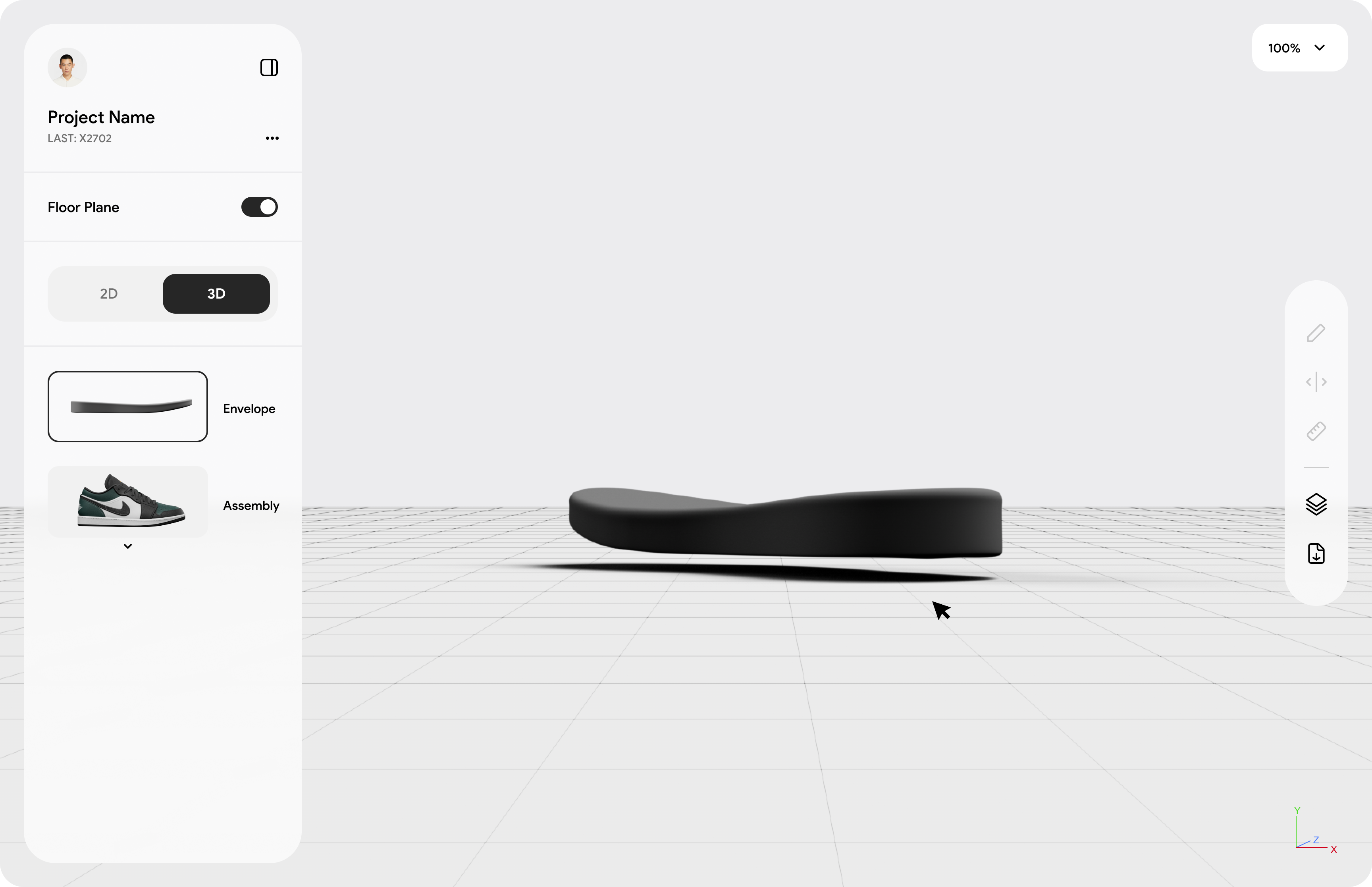
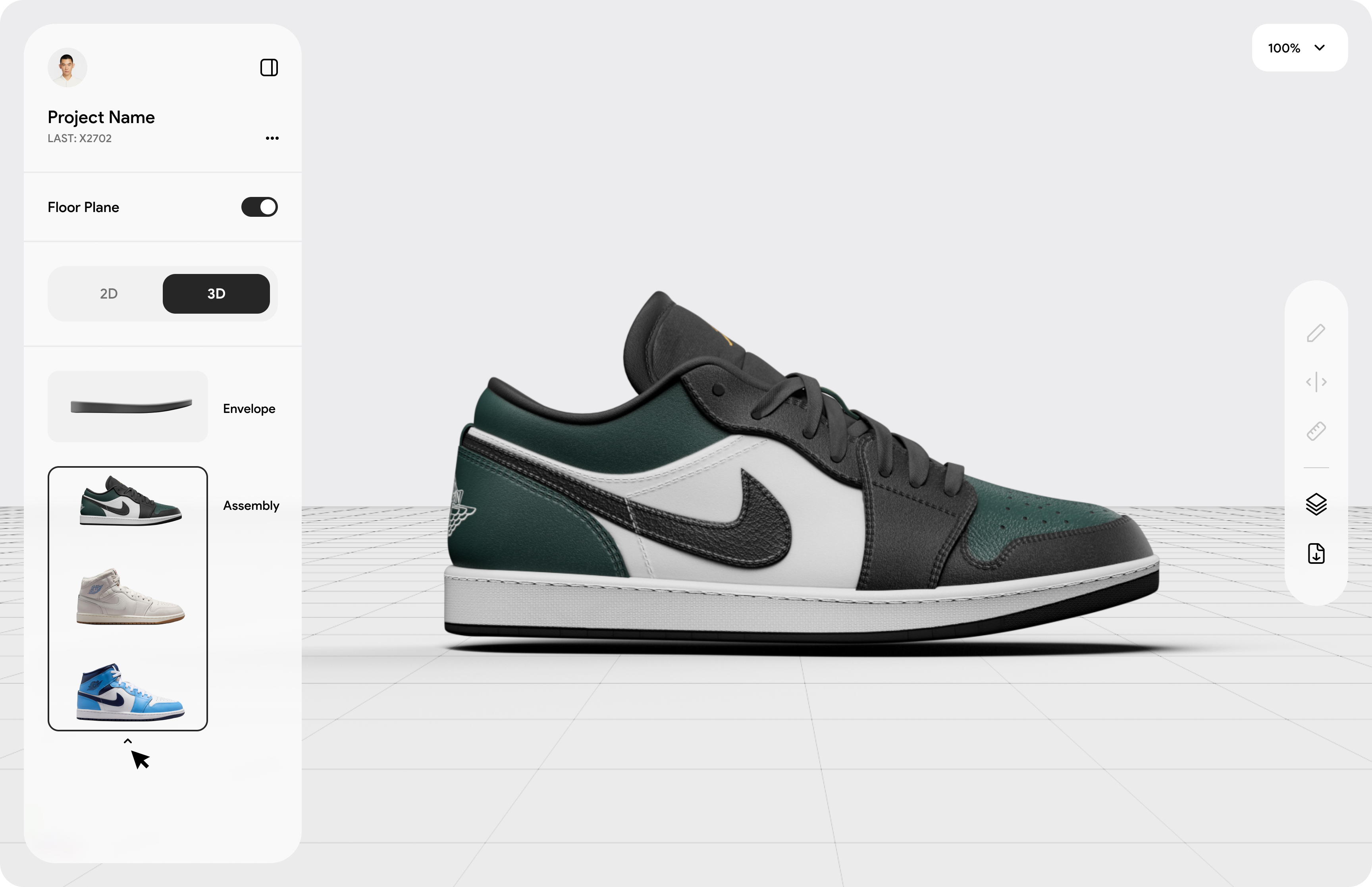
3D Visualization
A real-time rendering viewport that brings 2D sketches to life, giving designers immediate spatial and volumetric understanding of their concepts.
Post MVP Build
High Adoption Rate - 0 to 75+ Active Users in 30 Days: Accelerated adoption across 7 core product categories, including Basketball, SB, Golf, Running & Track, Tennis, Soccer, and NXT, within one month of the September 2019 launch.
Workflow Integration & Mandate: Successfully positioned the tool as a critical design asset, prompting category leads to formalize its integration into standard footwear design pipelines.
Pipeline Acceleration: From Weeks to Days: Validated through PM milestone reviews, the new workflow cut total design feedback turnaround from 2–3 weeks to 5–7 days. By streamlining cross-team and factory handoffs, teams dramatically reduced iteration cycles.
Workflow Integration & Mandate: Successfully positioned the tool as a critical design asset, prompting category leads to formalize its integration into standard footwear design pipelines.
Pipeline Acceleration: From Weeks to Days: Validated through PM milestone reviews, the new workflow cut total design feedback turnaround from 2–3 weeks to 5–7 days. By streamlining cross-team and factory handoffs, teams dramatically reduced iteration cycles.
.gif)

%201.png)

© 2026 Nicework Studio LLC.